Muhammad Ali: The Greatest's Unyielding Fight Against Time
Exploring the Legacy of a Boxing Legend and Cultural Icon
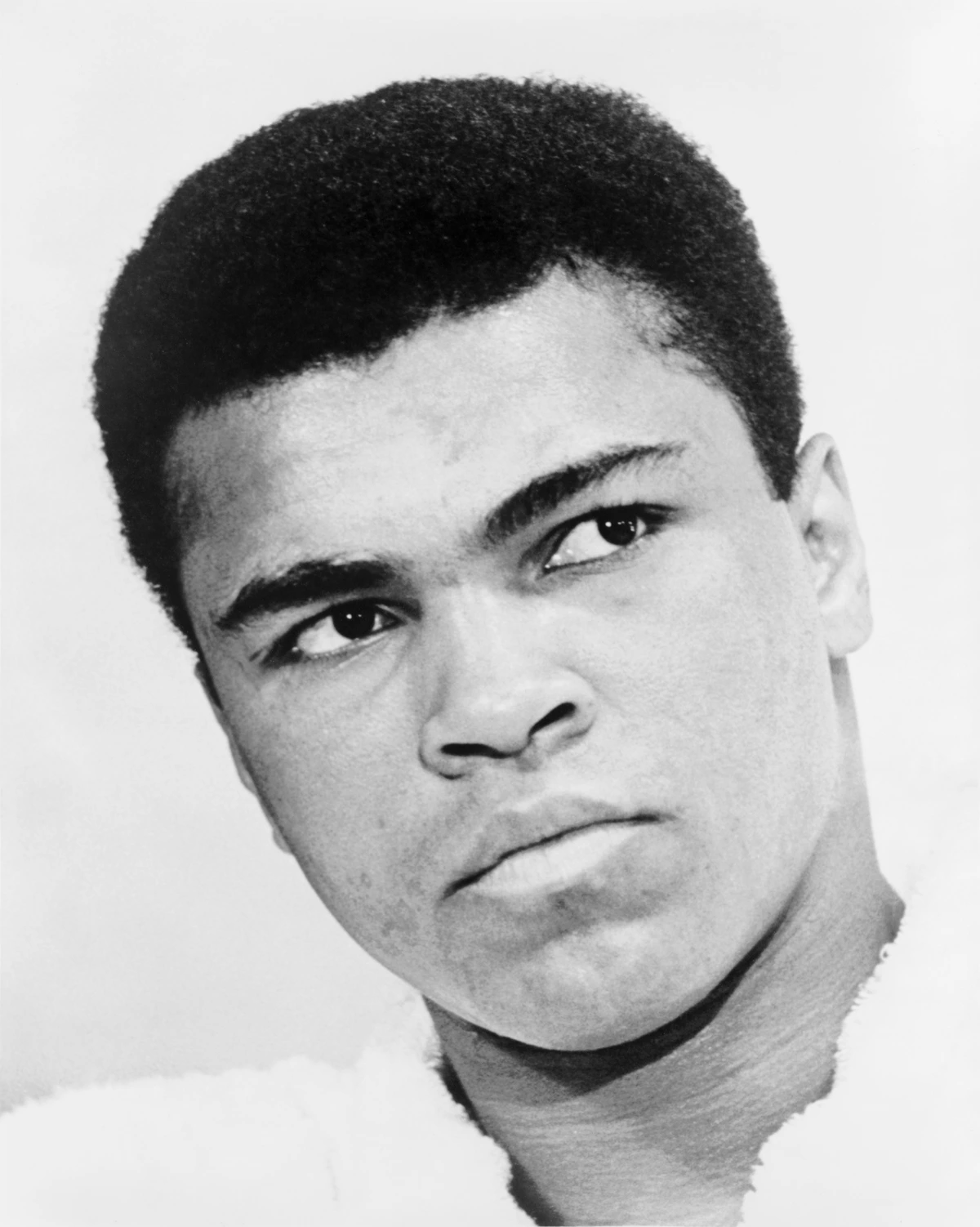
About
Muhammad Ali
Boxer
Muhammad Ali, the man who danced like a butterfly and stung like a bee, is a name that resonates far beyond the boxing ring. His fists became instruments of change, his words a declaration of freedom, and his very life an epic saga of struggle and triumph. Even at 74, Ali remains a cultural icon, not just for his boxing prowess but for his relentless spirit in the face of adversity. Diagnosed with Parkinson's disease in 1984, he has fought a different kind of battle ever since, one that reminds us all of our own mortality. As we delve into the life of this extraordinary figure, we explore the highs and lows, the victories and controversies, and ultimately, the legacy he leaves behind.
Born Cassius Marcellus Clay Jr. on January 17, 1942, in Louisville, Kentucky, Ali's early life was marked by a fierce determination that would later define his career. Raised in a working-class family, his father was a sign painter and his mother a homemaker. From a young age, Ali exhibited a rebellious spirit and an unyielding confidence, traits that would serve him well in the boxing ring. At just 12 years old, after having his bicycle stolen, he was introduced to the sport of boxing by a local police officer named Joe Martin. This pivotal moment set him on a path that would not only change his life but also the landscape of sports forever.
Ali quickly rose through the amateur ranks, winning six Kentucky Golden Gloves titles and the national amateur title in 1960. He made his professional debut later that same year, and by 1964, the world was abuzz with the arrival of a new heavyweight champion. In a stunning upset, Ali defeated Sonny Liston, a man considered unbeatable at the time, to claim the heavyweight championship. With this victory, he famously declared, "I am the greatest!" This proclamation was not just boastful rhetoric; it was a statement of identity, a refusal to be diminished by the societal expectations of a Black man in America during the 1960s.
Throughout his career, Ali's achievements were nothing short of legendary. He became a three-time world heavyweight champion, winning the title in 1964, 1974, and 1978. His fights with Joe Frazier, particularly the Thrilla in Manila in 1975, are etched in boxing history, showcasing not only his physical prowess but also his mental fortitude. Ali's boxing style, characterized by his speed and agility, earned him admiration and respect from fans and opponents alike. He was also the recipient of numerous awards, including the Olympic gold medal in 1960 and the prestigious Sports Illustrated Sportsman of the Year award in 1974.
However, Ali's journey was not without its share of controversies. His refusal to be drafted into the Vietnam War in 1967 due to his religious beliefs and opposition to the conflict sparked outrage and led to a tumultuous legal battle. He famously stated, "I ain't got no quarrel with them Viet Cong. No Viet Cong ever called me nigger." This act of defiance cost him his boxing titles and sidelined him for nearly four years. Yet, Ali's courage to stand up for his principles ultimately endeared him to millions and cemented his status as a cultural icon.
In addition to his professional challenges, Ali's personal life was also filled with notable events. He was married four times and fathered nine children, each relationship leaving a mark on his life. His second wife, Belinda, was often seen as a stabilizing force during his tumultuous career. However, his personal struggles mirrored his public persona—fighting against societal norms while grappling with his own demons.
Fast forward to more recent years, and Ali's health has been a focal point of concern for fans and family alike. His battle with Parkinson's disease has been a long and arduous one, affecting his speech and mobility. Despite this, his spirit remains unbroken. Ali has continued to be a presence in the public eye, advocating for humanitarian causes and supporting various charitable organizations. In 2016, he was awarded the Presidential Medal of Freedom, a testament to his impact both inside and outside the ring. Though physically diminished, Ali's charisma still shines through, reminding us all that the greatest fights are not always fought in the ring.
In the face of such a debilitating illness, Ali's journey serves as a poignant reminder of our mortality. He has transformed his health struggles into a platform for awareness, using his voice to inspire others facing similar battles. His story encourages us to reflect on our own lives, to appreciate the fleeting moments we have, and to fight for what we believe in, even when the odds are stacked against us.
As we look towards the future, Ali's legacy continues to inspire. His influence transcends boxing, touching on themes of social justice, resilience, and the power of belief. As he engages in this long fight against Parkinson's, we are reminded that the greatest battles are often those that occur within ourselves. Ali's life story is a testament to the human spirit's ability to rise above challenges, and his impact will resonate for generations to come. So, we watch and wait, hoping for more moments of brilliance from the champ who taught us that life, like boxing, is about how well you can take a punch and keep moving forward.
In conclusion, Muhammad Ali's life is not just a narrative of victories in the ring but a profound journey of personal growth, social activism, and unyielding resilience. His legacy is a reminder that true greatness extends beyond accolades and titles; it lies in the courage to stand for one's beliefs, the strength to overcome adversity, and the ability to inspire others to do the same. As we reflect on his enduring influence, we are reminded that Ali's fight against time is a testament to the enduring power of the human spirit. His story is one that will be told and retold, inspiring future generations to pursue their dreams and fight for justice, equality, and freedom.