The Iron Lady: Margaret Thatcher's Life and Legacy
Exploring the enduring impact of Britain's first female Prime Minister
About
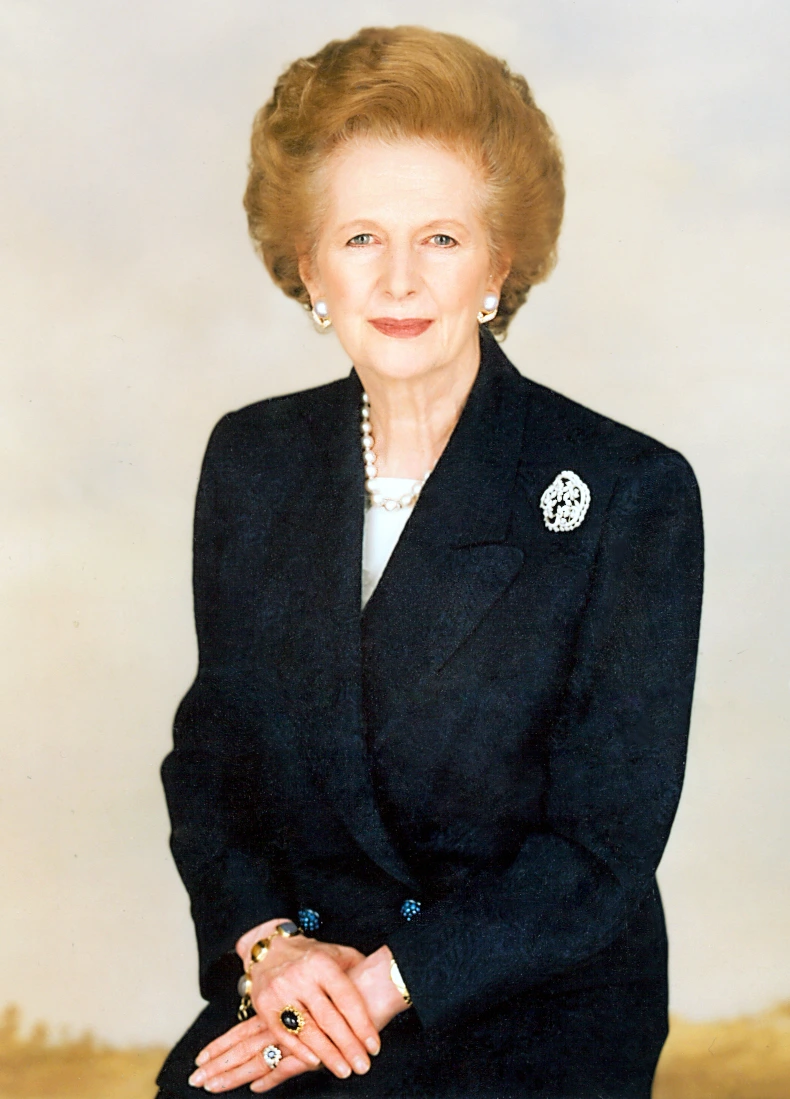
Margaret Thatcher
Stateswoman
The Iron Lady: Margaret Thatcher's Life and Legacy
Margaret Thatcher, known as the "Iron Lady," is a name that resonates through the corridors of British history. Few figures have shaped a nation as significantly as she did during her tenure as Prime Minister from 1979 to 1990. Her resolute nature and unwavering commitment to her principles not only earned her a formidable reputation but also a nickname that would forever define her legacy. While she faced fierce opposition throughout her career, her impact on British politics and the global stage is undeniable. Now at the age of 87, Thatcher stands as a towering figure whose life story reflects not just the struggles of a woman in power but also the complexities of leadership in a changing world. As we delve into her extraordinary journey, we uncover a narrative rich with triumphs, challenges, and a touch of that darkly humorous curiosity about mortality that makes us ponder how even iron can eventually rust.
Early Life and Education
Born on October 13, 1925, in Grantham, Lincolnshire, Margaret Hilda Roberts was the daughter of a grocer and a homemaker. Growing up in a close-knit family, she was instilled with a strong work ethic and a sense of purpose from a young age. Her father, Alfred Roberts, was a significant influence in her life, not just as a father but as a politician in his own right, serving as a local mayor. This early exposure to politics ignited a spark in young Margaret, who was known for her intelligence and ambition. She excelled academically, earning a scholarship to attend Somerville College, Oxford, where she studied chemistry. This scientific background would later inform her analytical approach to politics and economics.
After graduating in 1947, Thatcher embarked on a career in research at a chemical company. However, her passion for politics soon drew her into the political arena, leading her to join the Conservative Party. In 1950, she made her first attempt at becoming a Member of Parliament (MP) and, despite being unsuccessful, her determination paid off when she was elected as the MP for Finchley in 1959. As a rising star within the Conservative Party, Thatcher quickly climbed the ranks, serving in various roles, including Secretary of State for Education and Science. Her policies, particularly regarding education, showcased her firm belief in personal responsibility and free-market principles.
Political Ascendancy
Thatcher's career highlights are a testament to her formidable presence in British politics. In 1975, she became the leader of the Conservative Party, the first woman to do so, and in 1979, she ascended to the position of Prime Minister. Her election marked a significant shift in the political landscape, as she introduced a series of reforms that would come to define her legacy. Known for her tough stance on labor unions, she implemented policies aimed at reducing the power of trade unions and promoting the privatization of state-owned industries. Under her leadership, the UK saw significant economic changes, including a focus on deregulation and a shift towards a market-oriented economy. Her approach was not without controversy, leading to widespread strikes and protests, particularly during the Miners' Strike of 1984-1985.
Foreign Policy and Global Impact
Among her many achievements, Thatcher's foreign policy decisions also stand out. Her firm stance during the Falklands War in 1982, when Argentina invaded the Falkland Islands, showcased her resilience and decisiveness. The successful recapture of the islands bolstered her popularity and solidified her reputation as a strong leader on the international stage. Additionally, her close relationship with U.S. President Ronald Reagan positioned her as a key player in the Cold War, advocating for a firm stance against the Soviet Union. This partnership was instrumental in shaping Western policies during a time of significant geopolitical tension.
Controversies and Challenges
However, Thatcher's career was not without notable controversies and pivotal moments that would shape her time in office and beyond. Her policies, particularly those affecting the working class, earned her both fervent supporters and staunch adversaries. The Poll Tax, implemented in 1990, was one of the final straws that led to widespread protests and ultimately her resignation later that year. Despite the backlash, she remained an influential figure in British politics, often referred to as the most influential woman of the 20th century. Her legacy is a complex tapestry, woven with threads of both admiration and criticism.
A Lasting Legacy
As of now, Margaret Thatcher is at the venerable age of 87, and while she has retired from the political spotlight, her legacy continues to provoke discussion and debate. After her time as Prime Minister, she remained active in public life, giving speeches and writing her memoirs. Though her health has been a concern in recent years, she continues to be an enduring symbol of strength and resilience for many. Despite the rust that comes with age, she has outlasted many of her critics and allies alike, providing a living testament to the complexities of political life.
In contemplating Thatcher's life, it is impossible to ignore the awareness of mortality that accompanies such a long and impactful journey. Thatcher's health has been a topic of concern, particularly following a series of strokes in recent years. Yet even in her twilight years, she remains a figure of fascination, demonstrating the inevitability of aging while still holding on to the tenacity that defined her life. Her journey serves as a reminder of the fleeting nature of power and the enduring legacy one can leave behind.
Conclusion: The Iron Lady's Story Continues
Looking ahead, Margaret Thatcher's story is far from over. Her impact on British society, politics, and the global stage ensures that her legacy will be studied and debated for generations to come. As we reflect on the life of the Iron Lady, it becomes clear that her story is one of resilience, determination, and the complexities of leadership. Whether loved or loathed, Thatcher's life serves as a powerful narrative about the highs and lows of political life, a story that continues to engage our morbid curiosity about the inevitability of mortality and the indelible marks we leave behind. In a world where political figures often rise and fall, Thatcher’s enduring presence reminds us that the echoes of leadership can resonate long after the final curtain falls.