Silvio Berlusconi: A Comedy of Errors in Politics
Exploring the Life and Legacy of Italy's Controversial Figure
About
Silvio Berlusconi
Italian media tycoon
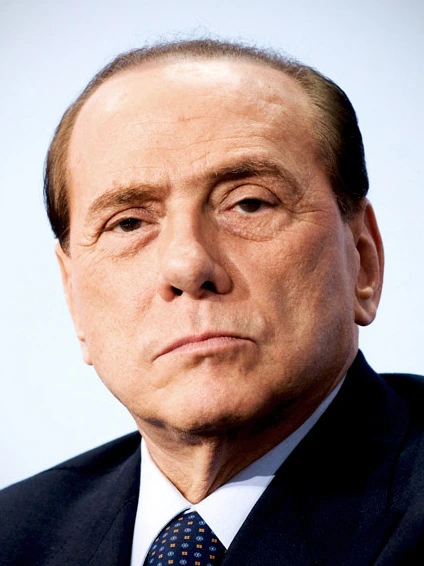
Ah, Silvio Berlusconi, the man, the myth, the media mogul turned political powerhouse who seemed to be as indestructible as a cockroach in a nuclear fallout. Born on September 29, 1936, in Milan, Italy, Berlusconi became a household name not just for his wealth but for his flamboyant personality and penchant for scandal. Over the decades, he has been a prime minister, a media tycoon, and an infamous figure in Italian politics, effortlessly blending the roles of politician and celebrity with all the grace of a drunken elephant on a tightrope. His life was a whirlwind of business ventures, political machinations, and legal entanglements that could fill several volumes of a darkly humorous encyclopedia. Despite the controversies that surrounded him, Berlusconi maintained an almost mythical status in Italy, captivating the public with his charisma and, let’s be honest, a rather impressive collection of tailored suits.
Berlusconi's rise to power began in the 1960s when he founded his first company, a construction firm, but his true fortune came from the media industry. In 1979, he launched his first television station, Canale 5, which would become the cornerstone of his media empire. By the 1990s, he had transformed Italian television into a spectacle of reality shows, soap operas, and talk shows, all while ensuring that his own political ambitions were never too far from the limelight. He entered politics in 1994, founding the Forza Italia party and winning his first term as prime minister. His charismatic appeal and populist rhetoric resonated with many, but his tenure was marred by numerous scandals, legal battles, and accusations of corruption, making him a lightning rod for both support and criticism.
Berlusconi's life is a tapestry woven with threads of ambition, scandal, and sheer audacity. He managed to dominate Italian media for decades, controlling a significant portion of the country's television networks and newspapers. This media prowess allowed him to craft his public image, often portraying himself as a man of the people, despite being one of the wealthiest individuals in Italy. His tenure in politics was characterized by a series of comebacks and dramatic exits, often resembling a soap opera more than a political career. He was prime minister three times, with his last term ending in 2011 amid a financial crisis that seemed to echo the chaos of his personal life. Berlusconi's political style was often described as flamboyant, and his speeches were peppered with humor, charm, and a healthy dose of bravado. This unique blend made him a beloved figure for some, while others viewed him as a dangerous populist who undermined Italy's democratic institutions.
In 2013, Berlusconi was convicted of tax fraud, a scandal that seemed to be just another chapter in his tumultuous life story. However, even this setback did not keep him down for long. He appealed, and the Italian judicial system, which often resembles a game of chess played by squirrels, allowed him to remain a significant player in the political arena. His ability to bounce back from legal troubles was almost as impressive as his ability to charm his way through political debates. Berlusconi's career was not just marked by scandals but also by his unique approach to governance, which often included promises of tax cuts, economic reforms, and a vision of Italy that was more about media spectacle than substance.
The reactions to Berlusconi's political maneuvers were as diverse as the Italian cuisine. Supporters hailed him as a visionary who revitalized the economy and brought Italy into the modern age, while critics lambasted him as a corrupt oligarch who prioritized personal gain over national welfare. The public's love-hate relationship with Berlusconi was palpable; he was often compared to a larger-than-life character from a Shakespearean play, oscillating between hero and villain. His infamous “bunga bunga” parties, filled with scandalous allegations and dubious claims, only added to his notoriety, making him the subject of countless jokes and memes. Even in his legal troubles, Berlusconi managed to maintain a sense of humor, often quipping that he was being persecuted for his success, which only endeared him further to his loyal supporters.
The implications of Berlusconi's life and career extend far beyond Italy's borders. His tenure reshaped the landscape of Italian politics, demonstrating how media influence could be wielded as a powerful tool for political gain. Berlusconi's ability to connect with the masses through television and charismatic rhetoric paved the way for a new breed of politicians who prioritize image and spectacle over traditional political discourse. His legacy raises questions about the future of democracy in an age where media manipulation seems to be the norm rather than the exception. As Italy continues to grapple with political instability, Berlusconi's influence lingers, reminding us that in politics, as in life, the show must go on.
As we look to the future, Berlusconi's story serves as a cautionary tale for aspiring politicians and a source of endless fascination for political junkies. His life was a series of dramatic highs and lows, each chapter more outrageous than the last. Whether he will be remembered as a comedic figure in the annals of history or a serious player in the political arena remains to be seen. One thing is certain, however: Silvio Berlusconi's life was anything but dull. With his passing in June 2023, we are left to ponder what the world of politics will look like without his larger-than-life presence. Will Italy's political landscape continue to be a circus, or will it evolve into something more stable? Only time will tell, but one thing is for sure—Berlusconi's legacy will continue to spark debate, laughter, and perhaps a few eye rolls for generations to come.
In conclusion, Silvio Berlusconi's life was a vivid illustration of how intertwined media and politics can be. His ability to leverage his media empire for political gain has left an indelible mark on Italy and beyond. As we reflect on his legacy, it is essential to recognize the lessons his career offers about the power of image, the fragility of political institutions, and the ever-evolving nature of public perception. The story of Berlusconi is not just about one man; it is a reflection of our times, a reminder that in the world of politics, the line between reality and spectacle is often blurred. As we move forward, let us hope that future leaders learn from both the triumphs and the missteps of this controversial figure, striving for a political landscape that values integrity, transparency, and genuine connection with the public.