Malcolm Fraser: Australia’s Most Unlikely Prime Minister
Exploring the Legacy of a Complex Political Figure
About
Malcolm Fraser
Farmer
Malcolm Fraser: Australia’s Most Unlikely Prime Minister
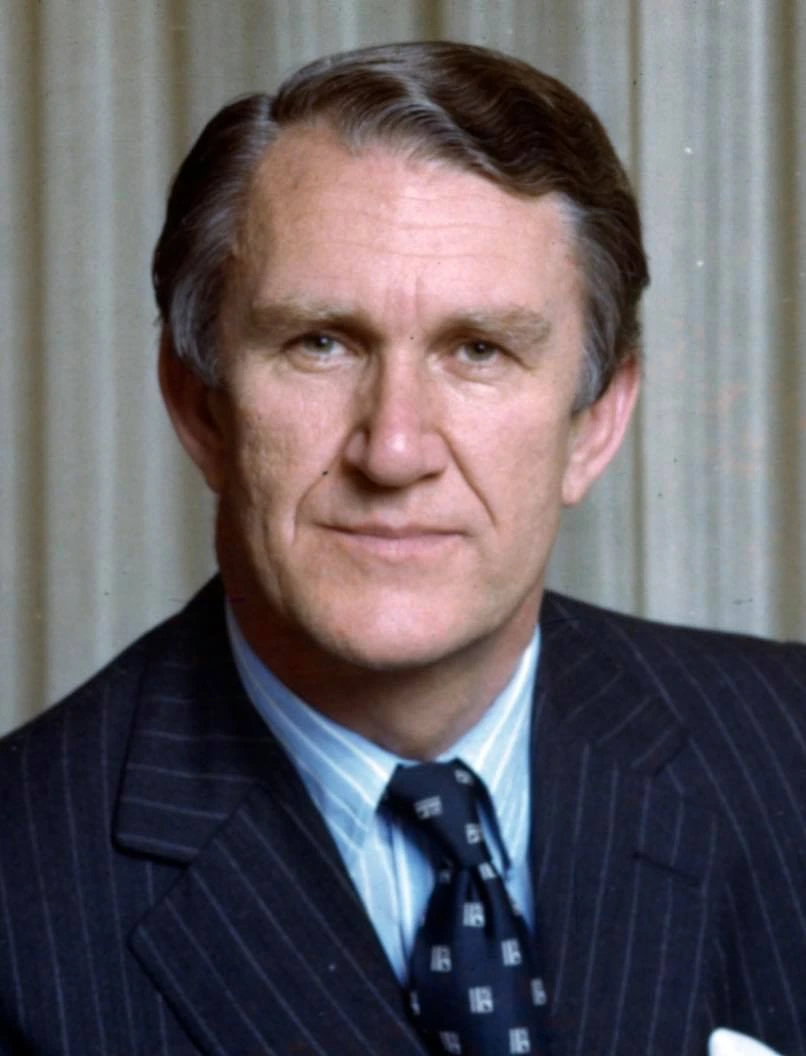
Malcolm Fraser, a name that resonates through the corridors of Australian politics, was not just a Prime Minister; he was a character straight out of a political satire. Born on May 21, 1930, in the serene town of Toorak, Melbourne, Fraser was destined for a life of privilege. He hailed from a well-off family, with his father being a successful businessman, which gave him a head start in the world. After graduating from the University of Melbourne with a degree in economics, he ventured into politics, becoming the member for Wannon in 1955. His journey from a young, ambitious politician to Australia’s 22nd Prime Minister, serving from 1975 to 1983, is a tale filled with twists, turns, and a fair share of controversies.
Fraser’s political career began in earnest during the tumultuous 1970s, a decade marked by social upheaval and economic challenges. After the dismissal of Prime Minister Gough Whitlam in 1975, Fraser ascended to power in a dramatic fashion. It was a political coup that would make headlines for decades. His government was characterized by a mix of austerity measures and grand promises, all while sporting a rather impressive collection of tweed jackets. The man had a knack for making a statement, even if it was just about his choice in outerwear. One can only wonder if he ever thought of launching a fashion line called “Fraser’s Tweeds.”
Contextually, the world was a different place in the 1970s. Australia was grappling with economic instability, high inflation, and the aftermath of the Vietnam War. The social fabric was fraying, with protests against conscription and a growing awareness of Indigenous rights. In this environment, Fraser’s ascent was both a blessing and a curse. His government was seen as a stabilizing force, but also as a regime that was out of touch with the rapidly changing societal norms. His policies often drew ire from the left, and he became a polarizing figure in Australian politics. While some praised him for his economic reforms, others criticized him for his perceived elitism and lack of empathy.
Diving deeper into his tenure, Fraser’s policies were a mixed bag. He implemented significant economic reforms aimed at curbing inflation, but these often came at the expense of social welfare programs. His government was responsible for the introduction of the Medibank system, which provided universal health care, a legacy that still impacts Australians today. However, his handling of Indigenous affairs was less than stellar, leading to criticism that he was more interested in maintaining the status quo than effecting real change. It’s as if he thought, “If it ain’t broke, don’t fix it,” while ignoring the fact that many Australians were indeed feeling quite broken.
The dismissal of Gough Whitlam remains one of the most controversial events in Australian political history, and Fraser was at the center of it all. It was a political drama that unfolded like a soap opera, complete with scandal, intrigue, and a surprising amount of public interest. Fraser’s decision to dismiss Whitlam was initially met with jubilation from his supporters but quickly turned sour as the public backlash grew. His government faced severe criticism, leading to a federal election in 1977 where he barely held onto power. It was as if he had won a game of political musical chairs, only to find that the music had stopped, and he was left standing uncomfortably in the spotlight.
Reactions to Fraser’s life and career have varied greatly over the years. Some see him as a pragmatic leader who navigated a difficult landscape, while others view him as a symbol of elitism and detachment. In a recent interview, political historian Dr. Sarah Jenkins stated, “Fraser was a product of his time, but he also shaped the future of Australian politics in ways that are still felt today.” This duality is what makes Fraser such a fascinating figure; he was both a visionary and a traditionalist, a man who could connect with the public yet remain ensconced in his privileged bubble.
As we look at the implications of Fraser's legacy, it becomes clear that his impact extends far beyond his years in office. His policies on health care and economic reform laid the groundwork for future administrations, influencing the direction of Australian politics for decades. However, his failures regarding Indigenous rights serve as a cautionary tale for modern politicians. The ongoing struggles faced by Indigenous communities highlight the need for leaders who are willing to engage with these issues authentically, rather than relying on outdated ideologies.
Fraser's legacy is also intertwined with the evolution of the Liberal Party itself. During his tenure, the party grappled with its identity, oscillating between conservative values and the need for modernization. This internal struggle continues to shape the party's policies and public perception today. Fraser's leadership style, characterized by a mix of pragmatism and idealism, set a precedent for future leaders who would navigate similar challenges.
As we reflect on Fraser's life, we are reminded that political legacies are often complicated. His story is one of triumph and failure, of leadership and missteps. While he may no longer be with us, his influence continues to shape the political landscape of Australia. What’s next for the country? Perhaps a more inclusive approach to governance, one that acknowledges the mistakes of the past while striving for a more equitable future. In the end, Malcolm Fraser may have left the stage, but the echoes of his political theater will linger on, serving as both a reminder and a lesson for those who dare to follow in his footsteps.
In conclusion, Malcolm Fraser's life and career offer a rich tapestry of lessons for current and future political leaders. His journey highlights the importance of adaptability, empathy, and the need for genuine engagement with all segments of society. As Australia moves forward, it is essential to remember the complexities of leadership and the impact of policies on diverse communities. Fraser's legacy serves as both a cautionary tale and a source of inspiration, reminding us that the path of governance is fraught with challenges, but also filled with opportunities for meaningful change.