Jimmy Carter: The Centenarian Redefining Aging and Leadership
Celebrating a life of service, humility, and resilience at 100.
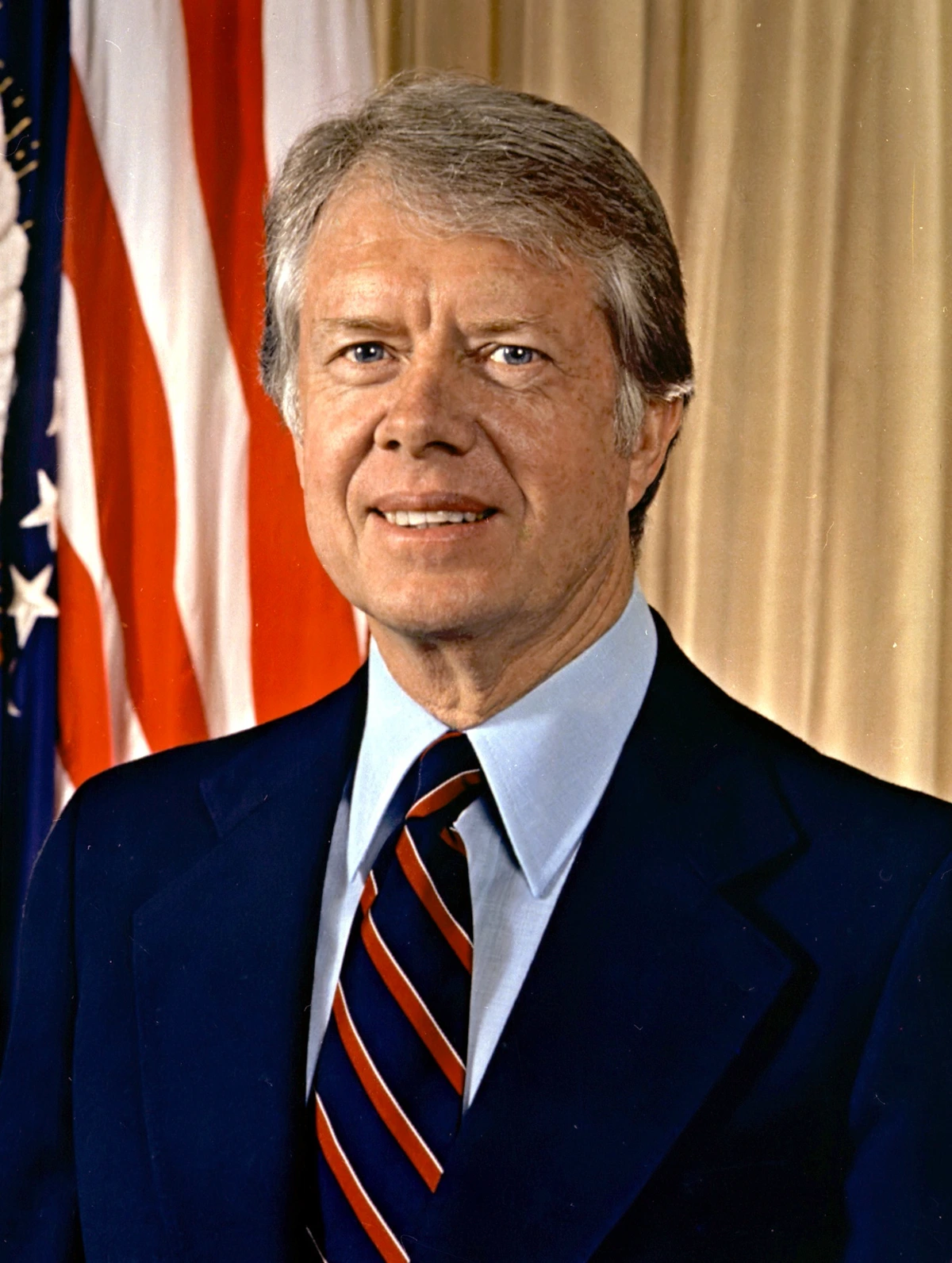
About
Jimmy Carter
Politician
Jimmy Carter: The Centenarian Redefining Aging and Leadership
In a world where celebrity culture often idolizes youth and beauty, Jimmy Carter stands as a remarkable anomaly. Celebrating his 100th birthday, the peanut farmer turned politician has not only lived longer than any other U.S. president but has also embraced his advanced age with a vigor and humility that is both inspiring and almost whimsical. While many public figures fade into obscurity after their tenure, Carter has continued to shine, building homes, teaching, and advocating for human rights. His life is a testament to the idea that a life well-lived transcends power and fame, weaving a narrative that keeps us all intrigued about where mortality and legacy intersect.
Born on October 1, 1924, in Plains, Georgia, James Earl Carter Jr. was the son of a peanut farmer. Raised in a close-knit family, his upbringing was imbued with the values of hard work and compassion. His mother, Lillian, was a registered nurse, while his father, Earl, was a businessman who ran a successful peanut farm. From a young age, Carter was taught the importance of service, honesty, and integrity. Growing up during the Great Depression, he witnessed firsthand the struggles of his community, an experience that would shape his political and humanitarian efforts later in life.
Carter’s early education laid the foundation for his future endeavors. He attended the U.S. Naval Academy, where he graduated in 1946. After serving in the Navy, he returned to Plains, taking over the family peanut business. But politics was never far from his mind. He entered local politics in the 1960s, becoming a state senator and then the governor of Georgia. His political career was characterized by progressive policies aimed at improving civil rights, education, and economic development. These early experiences would set the stage for his eventual bid for the presidency.
Jimmy Carter’s political career reached its zenith when he was elected the 39th President of the United States in 1976. His presidency was marked by significant achievements, including the Camp David Accords, which brokered peace between Israel and Egypt, and the establishment of the Department of Energy and the Department of Education. He championed human rights on a global scale, making it a cornerstone of American foreign policy. Carter’s administration also faced challenges, including the Iran Hostage Crisis and an energy crisis that led to soaring gas prices. However, his commitment to transparency and accountability set a new standard for future leaders.
After leaving the White House in 1981, most former presidents would have settled into a comfortable retirement, but not Carter. He embarked on a post-presidency career that has been nothing short of extraordinary. Founding the Carter Center in 1982, he dedicated his life to humanitarian efforts around the world, focusing on disease eradication, democracy promotion, and conflict resolution. He became a visible advocate for public health initiatives, including efforts to combat Guinea worm disease and malaria. His dedication earned him the Nobel Peace Prize in 2002, an accolade that cemented his legacy as one of the most impactful leaders in modern history.
Despite the accolades, Carter’s life has not been without controversy. His presidency faced significant backlash, particularly during the Iran Hostage Crisis, where 52 American diplomats and citizens were held hostage for 444 days. The crisis severely affected his approval ratings and ultimately played a role in his defeat by Ronald Reagan in the 1980 election. However, Carter's commitment to diplomacy and peace set a precedent for future leaders navigating international conflicts. His post-presidency years have also had their share of challenges, including a battle with cancer in 2015, which he remarkably overcame through innovative medical treatments and sheer tenacity.
Now at 100 years old, Jimmy Carter remains active in both public life and personal endeavors. He continues to teach Sunday school at his local church and works with Habitat for Humanity, proving that age is just a number when it comes to making a difference. His recent work has focused on advocating for affordable housing, climate change awareness, and continued support for global health initiatives. He has become a beloved figure not just for his political achievements but for his unwavering dedication to humanity.
Carter has also become an emblem of mortality awareness. He has often spoken about the importance of living a meaningful life, emphasizing the value of community service and kindness. In a world that often glorifies excess and ambition, Carter's clean living and straightforward approach serve as a reminder that good intentions can lead to lasting impact. His longevity is a testament to the benefits of a lifestyle marked by purpose, health, and active engagement.
Looking ahead, the question of mortality looms large for all of us, especially for public figures like Carter, who has outlived many of his contemporaries. Yet, rather than dwelling on the finite nature of life, Carter exemplifies how to embrace every moment. His legacy is not merely in his title as a former president but in the lives he has touched and the values he has promoted. As we reflect on his 100 years, we are reminded that the impact of a life well-lived extends far beyond its duration. In a world that often seems chaotic and uncertain, Jimmy Carter stands as a beacon of hope, reminding us all of the power of compassion and the importance of service to others. Long may he continue to inspire us, providing a roadmap for how to face our own mortality with grace and purpose.
Conclusion
As we celebrate Jimmy Carter's centenary, we are not just honoring a former president but a man who has dedicated his life to improving the world around him. His journey from a humble peanut farmer to a global humanitarian is a powerful narrative that challenges us to consider how we can contribute to society, regardless of our age. Carter's life serves as a reminder that true leadership is not defined by the office one holds but by the impact one makes. Let us take inspiration from his example and strive to lead lives marked by service, kindness, and an unwavering commitment to the common good.
In a time when the world needs more heroes, Jimmy Carter remains a shining light, guiding us toward a better future for all.