Fidel Castro: The Enduring Icon of Revolution
Exploring the Legacy of a Revolutionary Leader
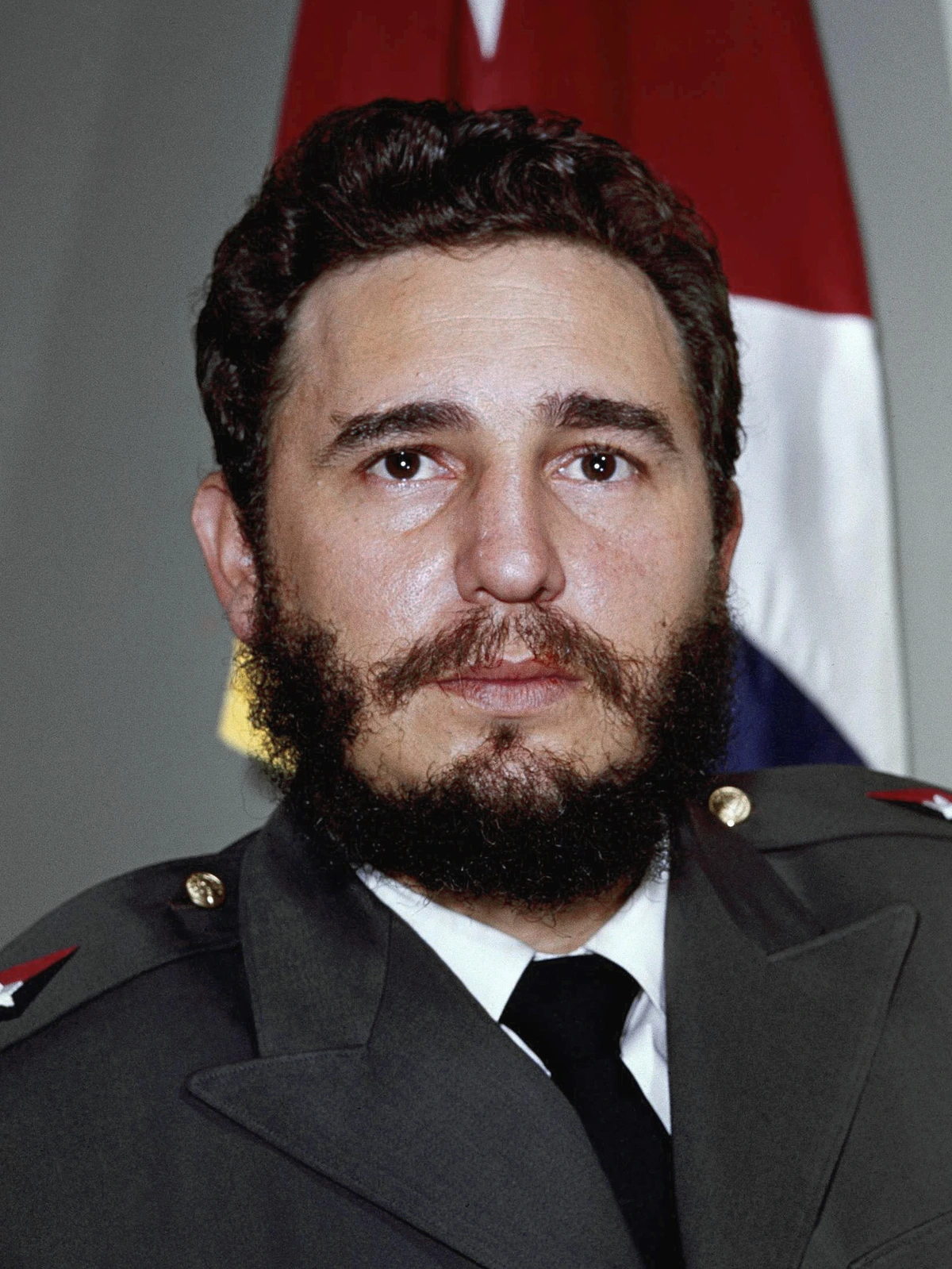
About
Fidel Castro
Cuban politician
Fidel Castro, the enigmatic Cuban leader who once seemed invincible, has defied the odds to reach the ripe old age of 90. A figure shrouded in both adoration and disdain, Castro's life story reads like an epic novel filled with audacious escapades, political intrigue, and stubborn endurance. He has survived more than 600 assassination attempts, a fact that in itself would make a gripping Hollywood blockbuster. From exploding cigars to poisoned wetsuits and even a pen rigged with a hypodermic needle, Castro's life has been anything but dull. As he trades his military fatigues for tracksuits and marathon speeches for quieter days, one cannot help but wonder about the legacy he leaves behind and how mortality might shape his long-standing narrative.
Born on August 13, 1926, in the small town of Birán in Cuba, Fidel Alejandro Castro Ruz came from a relatively well-off family. His father, Ángel Castro, was a wealthy Spanish immigrant who had made his fortune in the sugar industry, while his mother, Lina Ruz, was a humble household servant. This unique blend of privilege and simplicity would shape Fidel's worldview. He was the second of six children in his family, and from an early age, he exhibited a rebellious streak that hinted at his future as a revolutionary.
Castro attended prestigious schools, showing a particular aptitude for debating and oratory that would serve him well in later years. He was a bright student who excelled academically, and he later moved on to the University of Havana, where he became involved in student politics. This early engagement in socialist activism would set the stage for his involvement in the Cuban Revolution. Castro's early life was marked by a mix of privilege and political awakening, a potent combination that fueled his ambition and desire for social change.
Fidel Castro's career is a tapestry woven with audacity and resilience. His rise to power began in the late 1950s when he led a successful revolution against the authoritarian regime of Fulgencio Batista. The victory in 1959 marked a turning point not just for Cuba but also for the entire Caribbean and Latin America. Castro's regime introduced sweeping reforms, including land redistribution and social programs aimed at improving healthcare and education. While his policies garnered him a cult-like following among some, they also drew sharp criticism from those who felt his methods were too extreme.
Castro's leadership style was characterized by his fiery speeches and unwavering commitment to socialism, which often put him at odds with the United States. The Cuban Missile Crisis of 1962 was a defining moment in his career, showcasing the extent of his willingness to stand his ground against U.S. pressure. The crisis brought the world to the brink of nuclear war, but Castro emerged from it as a symbol of defiance against American imperialism. Over the years, he became a fixture in global politics, often aligning himself with other revolutionary movements in Africa and Latin America, further solidifying his reputation as a revolutionary icon.
Throughout his life, Castro was no stranger to controversy. His relationships, both personal and political, shaped much of his legacy. He was married twice and fathered several children, but his love life often took a backseat to his political ambitions. His close ties with Soviet leaders during the Cold War also fueled suspicions and accusations of his regime being a puppet state. Notably, Castro's anti-American rhetoric and actions, such as the nationalization of U.S. businesses in Cuba, led to a long-standing economic embargo that has had lasting effects on the island nation.
In recent years, Fidel Castro has stepped back from the public eye, leading a quieter life in Cuba. After officially retiring from politics in 2008, he handed over the reins to his brother, Raúl Castro. Since then, he has remained a figure of intrigue, occasionally surfacing in the media to share his thoughts on global events. His health has been a topic of speculation, especially given his advanced age, but his legendary stubbornness suggests that he will continue to defy the odds. At 90, Castro has become a living testament to the complexities of political survival.
As we contemplate Castro's mortality, it is worth considering how he has lived his life. The man who survived countless assassination attempts bears a unique awareness of his own fragility. His long-standing commitment to a lifestyle of discipline and dedication, as well as his political convictions, has arguably contributed to his longevity. Castro’s life serves as a reminder that even the most formidable figures are not immune to the passage of time, and moments of reflection become increasingly vital as one approaches the twilight years.
In conclusion, Fidel Castro remains a figure who divides opinion, celebrated by some as a revolutionary hero and reviled by others as a tyrant. His journey, marked by triumphs and controversies, will undoubtedly leave a lasting impact on history. As we look to the future, one can only speculate how his legacy will be interpreted by generations to come. Will he be remembered as the ultimate survivor, battling against the odds? Or will he serve as a cautionary tale of the pitfalls of absolute power? Either way, Fidel Castro's story is far from over, and his enduring spirit continues to captivate our morbid curiosity.
The Legacy of Fidel Castro
Fidel Castro's legacy is complex and multifaceted. His influence extends beyond Cuba, impacting various revolutionary movements and shaping the political landscape of Latin America. Supporters hail him as a champion of the oppressed, while critics argue that his regime stifled dissent and curtailed freedoms.
The ongoing debate about Castro's legacy reflects broader themes in global politics, such as the struggle for social justice, the role of authoritarianism, and the impact of U.S. foreign policy. As we analyze his life and the consequences of his actions, it becomes clear that Castro's story is not merely a historical account but a lens through which we can examine the challenges and triumphs of revolutionary movements worldwide.
In the end, Fidel Castro's life serves as a profound reminder of the complexities of leadership, the weight of ideology, and the enduring struggle for power and justice. His tale is one of resilience, ambition, and the relentless pursuit of a vision, leaving us to ponder the true meaning of revolution in our contemporary world.